


Hello everyone, During my full time job i am considered to be a fiber optic network engineer i currently run/jump/splice fiber optics inside several data centers in the Dallas/FT Worth area, As well as in rouge environments for ATT, Time Warner, Level 3, XO, and Cogent.
This thread will be full of pictures and descriptions showing the process of splicing fiber optics,
Just incase for you that did not know there is a color guide to fiber,
Blue,Orange,Green,Brown,Slate,White,Red,Black,Yellow,Violet,Rose,Turquoise.
The pictures im showing in this thread are from West Texas, The route google is taking via Arial drop locations to Austin TX to launch there fiber optic network.
The first picture we have here is a Arial enclosure which goes on side of transmissions tower power companies use, The two middle cables are ground cables containing 24 Fibers a piece, 1 Buff Blue for 12 fibers, and a Orange Buff containing 12 fibers so there is a total of 48.
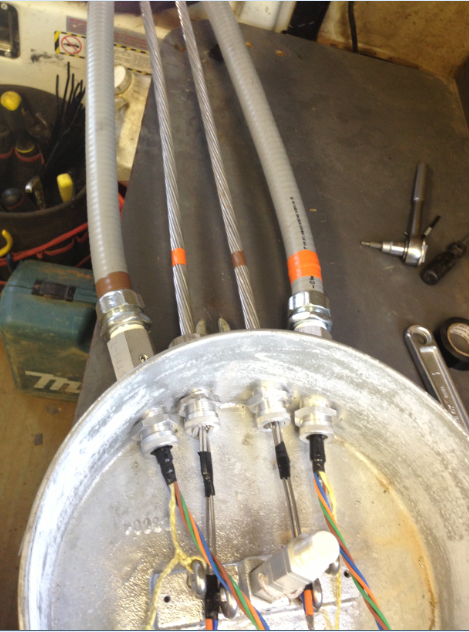
Those two inline cables known as grounds that run across the transmission towers are used for grounds for the electric companies such as oncore, This is known as "Hidden fiber"
The outer two ducts you see are the same amount of fiber how ever is is standard fiber cable 24 Count which is tuned from this last tower into a small building where the fiber is jumper-ed into different routes.
The next picture is detailed to be what i currently have in the "fresbie" tray where the fiber is stored after i use a fusion splicer to fuse the two cores together,
Fiber is very delicate and breats/fractures very easy, In order to splice the correct way it has to be cleaned very well when it is bare, i prefer to use acidtone my self.

This next picture is my fusion splicing machine which auto-aligns the fiber for it to be spliced.
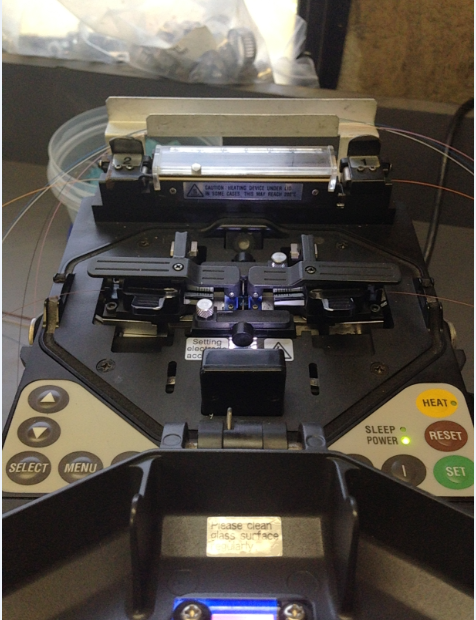
A few pictures follow through the fusion splicing process.

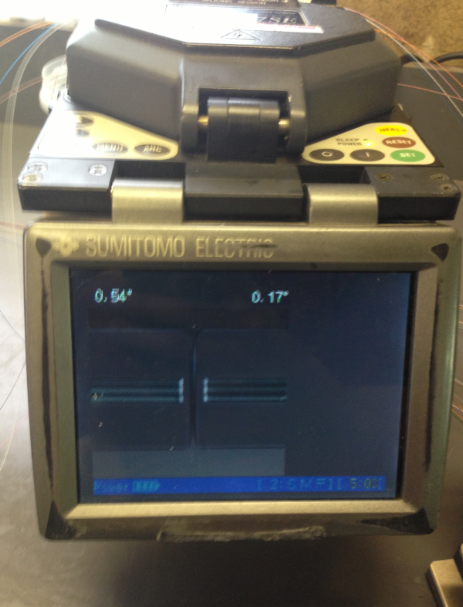
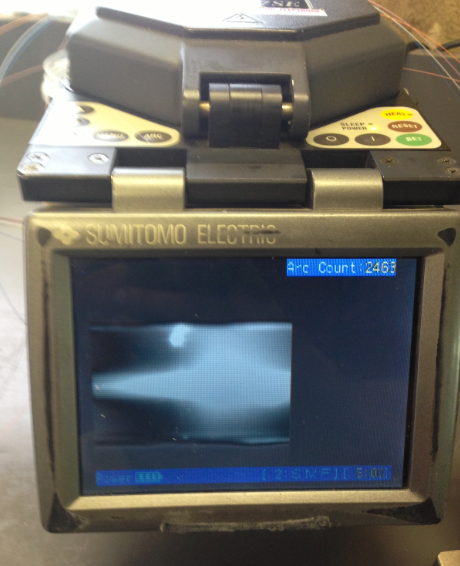
After the splice is complete a screen shows the avg db loss per splice.

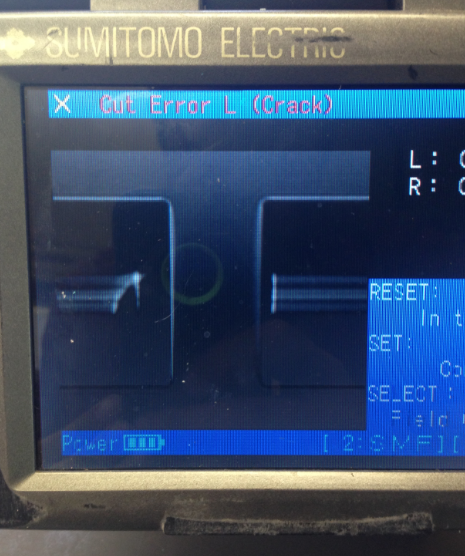
Before i put the two pieces of fiber into the machine i use what is called a cleaver it uses a diamond wheel to cut the fiber "Cleave" if it is not cleaved the correct way or if the tip of the fiber comes into contact with something it may break, like it is shown in the picture below it is only noticeable via the zoomed in camera within the machine.
Heres a few more pictures.


Any questions?
This thread will be full of pictures and descriptions showing the process of splicing fiber optics,
Just incase for you that did not know there is a color guide to fiber,
Blue,Orange,Green,Brown,Slate,White,Red,Black,Yellow,Violet,Rose,Turquoise.
The pictures im showing in this thread are from West Texas, The route google is taking via Arial drop locations to Austin TX to launch there fiber optic network.
The first picture we have here is a Arial enclosure which goes on side of transmissions tower power companies use, The two middle cables are ground cables containing 24 Fibers a piece, 1 Buff Blue for 12 fibers, and a Orange Buff containing 12 fibers so there is a total of 48.
Those two inline cables known as grounds that run across the transmission towers are used for grounds for the electric companies such as oncore, This is known as "Hidden fiber"
The outer two ducts you see are the same amount of fiber how ever is is standard fiber cable 24 Count which is tuned from this last tower into a small building where the fiber is jumper-ed into different routes.
The next picture is detailed to be what i currently have in the "fresbie" tray where the fiber is stored after i use a fusion splicer to fuse the two cores together,
Fiber is very delicate and breats/fractures very easy, In order to splice the correct way it has to be cleaned very well when it is bare, i prefer to use acidtone my self.
This next picture is my fusion splicing machine which auto-aligns the fiber for it to be spliced.
A few pictures follow through the fusion splicing process.
After the splice is complete a screen shows the avg db loss per splice.
Before i put the two pieces of fiber into the machine i use what is called a cleaver it uses a diamond wheel to cut the fiber "Cleave" if it is not cleaved the correct way or if the tip of the fiber comes into contact with something it may break, like it is shown in the picture below it is only noticeable via the zoomed in camera within the machine.
Heres a few more pictures.
Any questions?


