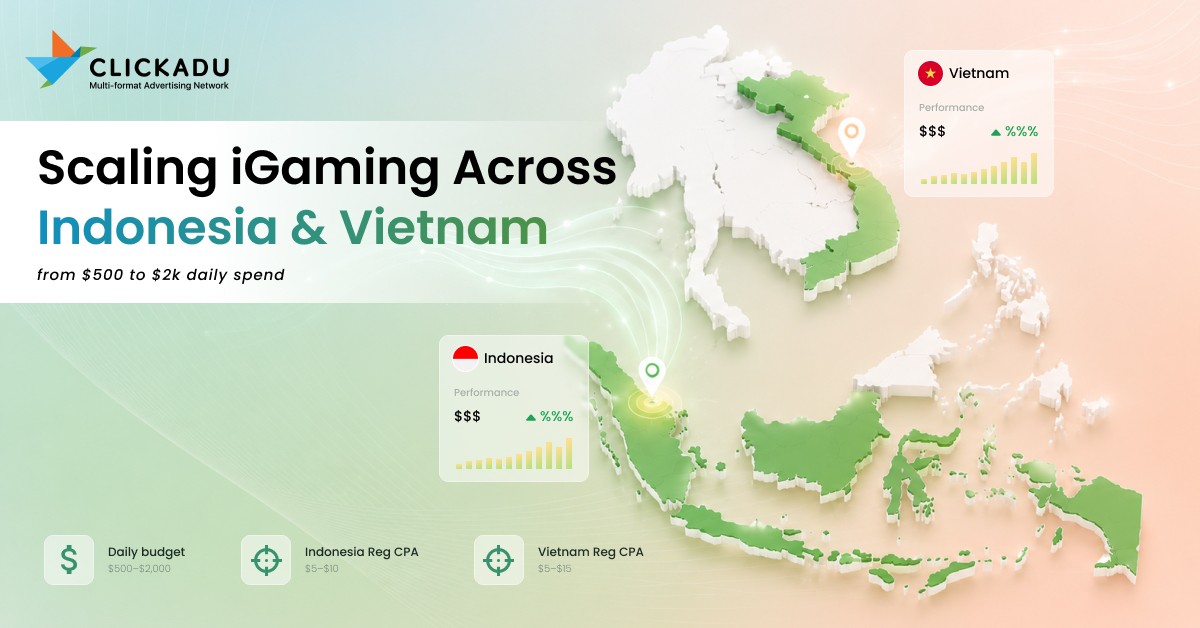
How to Launch and Scale iGaming Campaigns in Indonesia and Vietnam
This case study highlights the launch and scaling approach used across multiple iGaming advertisers running campaigns in Indonesia and Vietnam. With a focus on controlled testing, source-level optimization, and performance-based scaling, the campaigns achieved stable registration and deposit costs while daily budgets increased from $500–$600 to as much as $1,500–$2,000.
Campaign Overview
- Vertical: iGaming
- GEOs: Indonesia, Vietnam
- Main Ad Format: Popunder
- Additional Ad Format: Banner
- Pricing Models: SmartCPM, SmartCPA
- Conversion Types: Registration, Deposit
- Campaign Period: Long-term cooperation, including partnerships lasting over one year
- Campaign Goals:
- Increase the number of active players
- Maintain stable registration and deposit costs
- Identify high-performing websites and zones
- Scale traffic without sacrificing efficiency
The case summarizes results across multiple advertisers. Performance varied depending on the brand, offer, landing page, tracking setup, and campaign configuration.
Strategy Overview
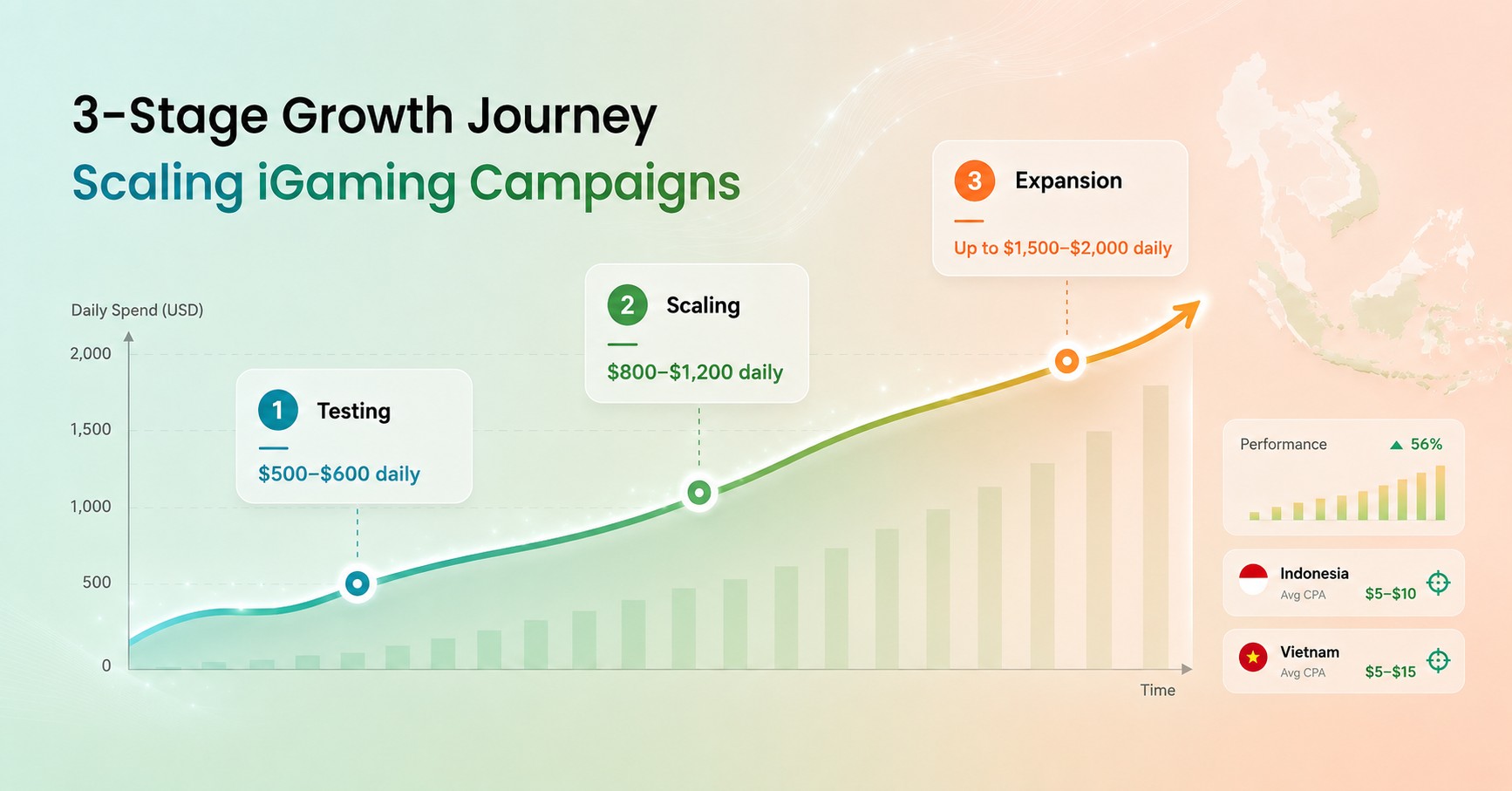
The campaigns followed three performance-based stages. The transition between stages depended on conversion volume, tracking quality, zone performance, and the advertiser’s readiness to scale rather than on a fixed monthly timeline.
Initial Launch and Testing
Campaigns started with a daily budget of $500–$600.
The initial setup typically included:
- Two SmartCPM campaigns on different websites
- Up to three SmartCPA campaigns when postback tracking was available
- Around $100 in additional budget for SmartCPA testing
- Popunder as the main performance format
- Separate source groups based on price and available traffic volume
SmartCPM campaigns were launched on proven whitelists. Custom rates were used to avoid overpaying for expensive traffic and to increase bids on zones with stronger potential.
SmartCPA was used only when conversion tracking and postback integration were configured correctly.
The main goal of this stage was to collect enough data and identify websites and zones capable of generating stable registrations and deposits.
Optimization Process
Testing Phase
During the initial testing stage, the team focused on controlled traffic acquisition and source-level analysis.
Key actions included:
- Separating campaigns by website and source group
- Applying custom rates to individual zones
- Retaining essential targeting by browser, OS version, and browser language
- Allowing enough time for delayed iGaming conversions to appear
- Avoiding major optimization decisions before sufficient data was collected
Because registrations and deposits could appear with a delay, the campaigns were not optimized too aggressively during the first stage.
Performance-Based Scaling
Once stable conversion activity appeared, daily budgets increased to $800–$1,200.
The optimization process included:
- Excluding zones with no conversions or consistently expensive conversions
- Reducing rates on zones that converted but remained above the desired CPA
- Increasing bids and budgets on zones with stable deposit performance
- Launching an additional SmartCPA campaign
- Keeping SmartCPA settings relatively broad while retaining browser, OS, and language targeting
Instead of removing every expensive source immediately, custom rates were reduced first when a zone still generated registrations or deposits.
Expansion Phase
After the core setup proved stable, daily budgets increased to $1,500–$2,000.
The expansion strategy included:
- Scaling proven whitelists
- Testing additional websites and source groups
- Separating campaigns by website, bid level, zone quality, and format
- Adding Banner campaigns when advertisers also required brand visibility
- Continuing weekly optimization to avoid excluding potentially valuable traffic too early
Results
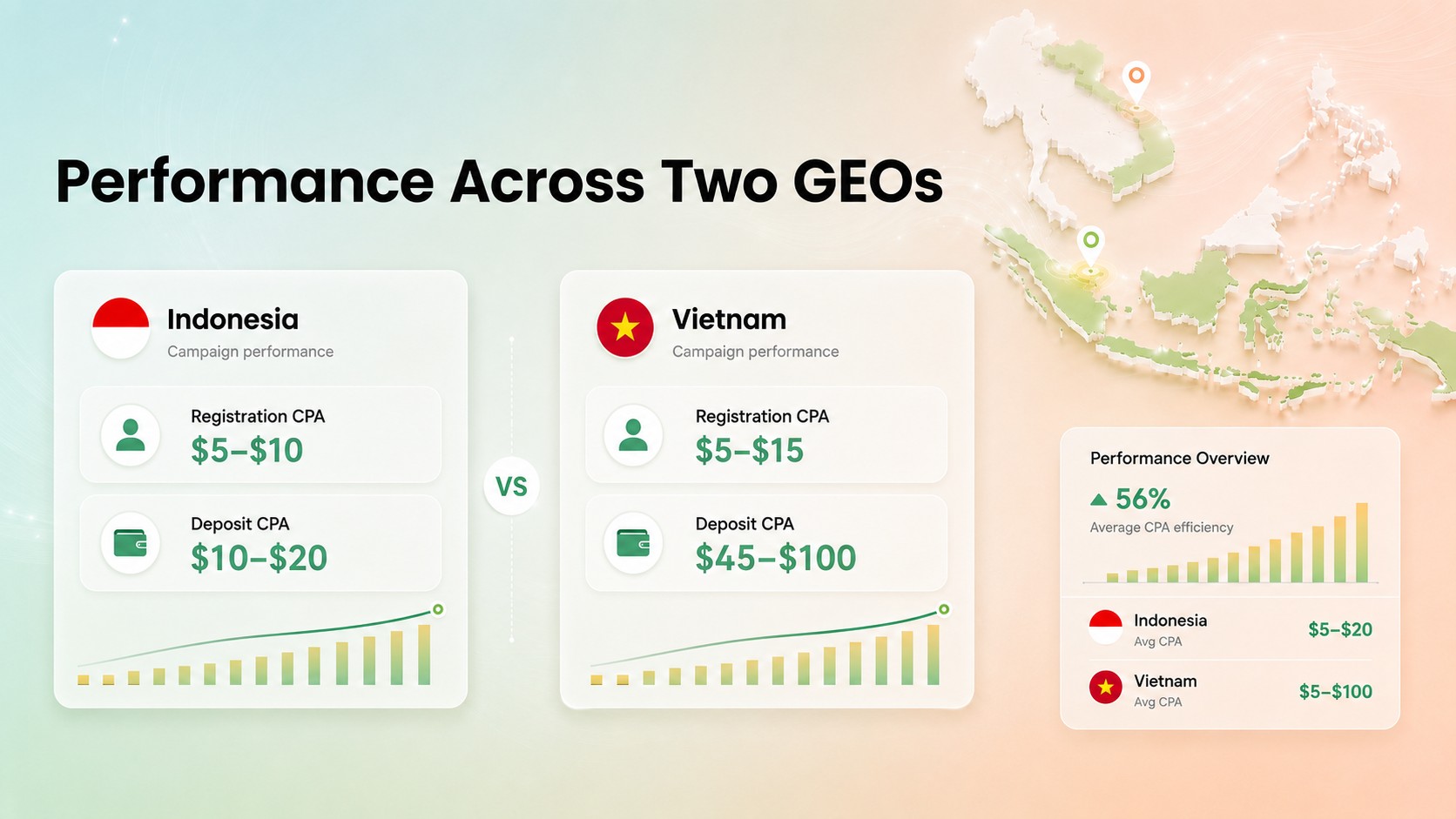
Indonesia
Registration CPA: $5–$10
Deposit CPA: $10–$20
Vietnam
Registration CPA: $5–$15
Deposit CPA: $45–$100
Across the analyzed campaigns, both GEOs achieved stable registration and deposit costs within the advertisers’ acceptable KPI ranges.
Popunder remained the primary performance format. SmartCPM was used for controlled testing and zone-level optimization, while SmartCPA supported scaling when reliable conversion tracking was available.
More than ten iGaming brands ran campaigns in each GEO, with several advertisers maintaining cooperation with Clickadu for over one year.
Key Takeaways
Performance-Based Scaling
Campaigns should move to the next stage only after registration and deposit performance becomes stable. Scaling according to a fixed schedule can lead to inefficient budget allocation.
Source-Level Optimization
Custom rates make it possible to reduce costs on expensive converting zones without removing traffic that may still have potential.
Reliable Tracking
SmartCPA is most effective when postback integration and conversion tracking are configured correctly.
Delayed Conversions
iGaming campaigns require enough time to collect meaningful data. Optimizing too frequently may result in promising sources being excluded before delayed conversions appear.
Format Selection
Popunder was the main performance driver, while Banner campaigns were added later when advertisers needed additional brand visibility.
Conclusion
Clickadu’s performance-based approach helped multiple iGaming advertisers launch and scale campaigns in Indonesia and Vietnam while maintaining stable registration and deposit costs.
By combining controlled SmartCPM testing, reliable SmartCPA tracking, custom zone-level rates, and gradual budget increases, the campaigns scaled from $500–$600 to as much as $1,500–$2,000 in daily spend.
The results show that successful iGaming scaling depends not only on increasing budgets, but also on giving campaigns enough time to collect data, identifying proven sources, and expanding only when performance supports the next step.


 Monetization formats we offer:
 Popunder Ads |
  Timely and automated payouts
 Questions? Suggestions? reach out at support@clickadu.com
 Ready to start earning more? Sign up here

 Spring is in full swing—and so is TES Seville! The season of new opportunities is here, and this event is the perfect place to seize them!


 What’s New:
 Reduces risks from Google’s new privacy updates
 Read the
 Attention Publishers: New Banner Format Now Live in Your Panel!
 Here’s what you get:
 Check your panel and activate the new format to boost your monetization today:


 Timeline:
 Where they work best
 How to get started
 Added a few examples in the attached images



 NBA Finals and
  NHL Finals are already bringing millions of fans online every day.
 FIFA World Cup 2026 is expected to dominate global sports traffic and engagement.